Home / Journal / Renovation Case Study
Journal — Renovation Case Study · The Block’s Alisa & Lysandra
5 Window Covering Lessons From a Heritage Home Renovation
A wrong window covering choice can undo months of careful renovation work. Here’s what a heritage home makeover taught us about getting it right — and what it means if you’re planning the same thing in Sydney.
Most renovation budgets treat window coverings as an afterthought — something to sort out once the paint’s dry and the furniture’s in. The Block’s Alisa and Lysandra Fraser did the opposite. When they took on a full renovation of a heritage Victorian home in Melbourne’s Albert Park — three bedrooms, three bathrooms, two living areas, a cinema room and a wine cellar — window coverings were one of the very first decisions on the table, locked in before a single wall was repainted.
That sequencing matters more than most homeowners realise. Get it wrong, and you’re stuck retrofitting a beautiful room around blinds that don’t fit the mood, the light, or the heritage constraints. Get it right, and every other decision in the room — paint, furniture, even the mood at 7pm on a Tuesday — falls into place around it. Here’s what they chose, room by room, and what each choice means if you’re planning something similar in a Sydney home.
What This Means for Sydney Homeowners
- Heritage overlays are common here too. Double Bay, Paddington, Woollahra and the Inner West all carry heritage-listed streetscapes — the same “plan coverings before you plan paint” logic applies, since some window treatments need council sign-off before installation.
- Harbour humidity changes the fabric conversation. Sheer and natural-fibre fabrics that suit Melbourne’s drier climate can behave differently in Sydney’s coastal humidity — ask about moisture-resistant finishes for rooms near the water or with limited airflow.
- North-facing living areas need a different plan than Albert Park’s. Sydney’s northerly aspect brings more consistent glare across the day than Melbourne’s — layering a sheer with a blockout option (rather than sheer alone) is usually the better long-term call.
- Whole-house automation pays off faster in a larger footprint. If you’re covering multiple storeys or a wide harbour-facing frontage, one PowerView system controlling every room is far more practical than room-by-room manual operation.
Master Bedroom
Privacy Without Losing the View
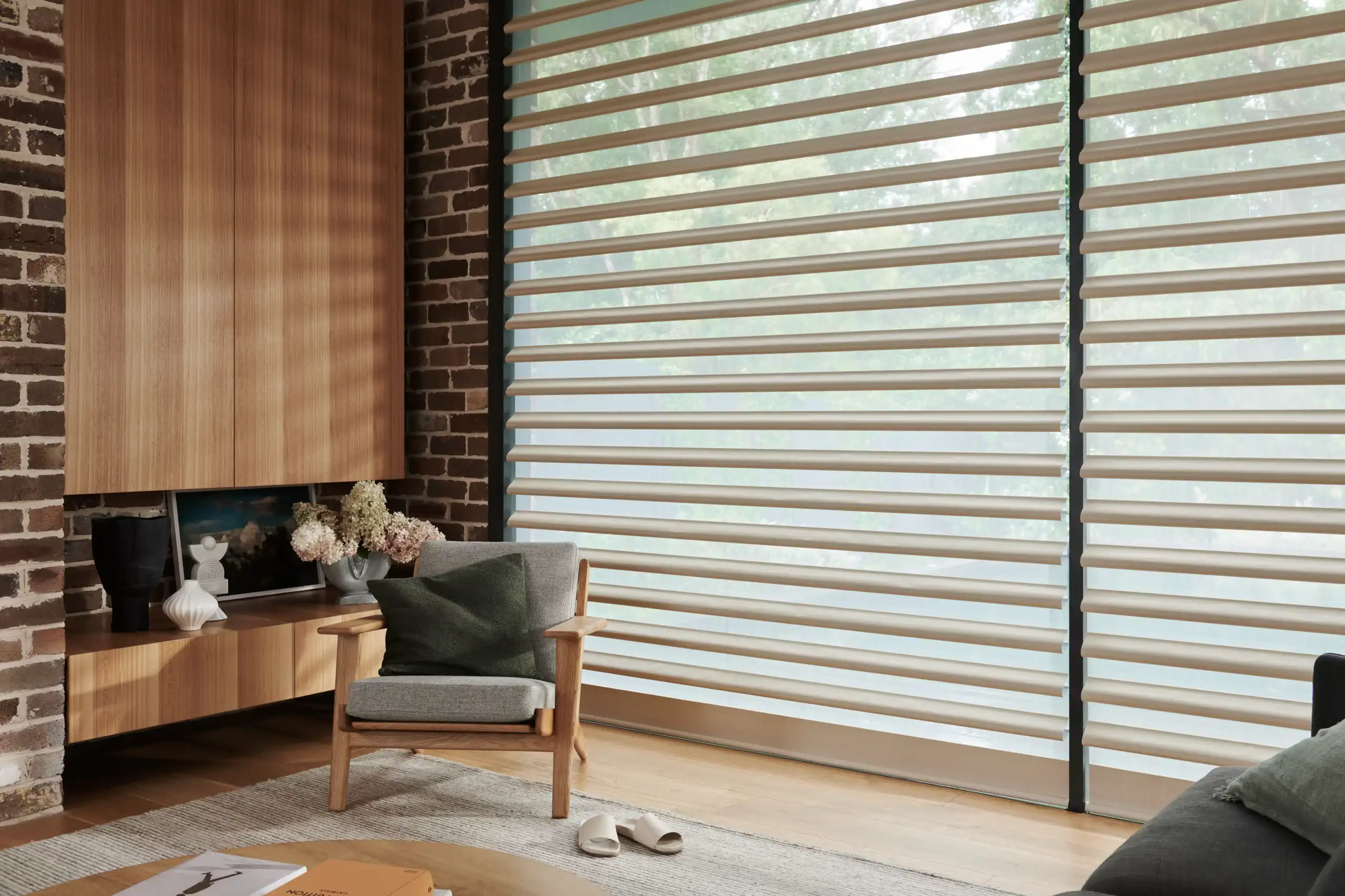
The bedroom sits on the ground floor at the front of the house, so privacy without compromising natural light or the outlook was the priority from day one. They chose Luminette Privacy Sheers in ‘Ideal Greige’ with room-darkening opacity — a visually striking alternative to sheer curtains, with translucent or room-darkening vertical vanes that rotate a full 180 degrees for precise light and privacy control.
For a Sydney front bedroom facing a street or a neighbour’s window, this is exactly the kind of product to ask about: it solves the privacy problem without the “curtains drawn all day” look that makes a room feel closed off.


Main Living Room
The Room That Took Longest to Plan
The kitchen, living and dining area next to the master bedroom took the longest to get right, and it’s easy to see why: huge feature windows and sliding doors open the space straight into the garden, drawing light through and opening the whole floor up. Alisa and Lysandra installed Luminette Privacy Shades here too — this time in China White with translucent opacity, ideal for anyone who wants coverage without giving up the view.
This is the room most Sydney open-plan renovations get wrong, because it’s tempting to treat the whole indoor-outdoor run as one continuous window. Running one product family across the full opening — rather than mixing styles per pane — is what keeps a wide glass wall reading as a single, considered space.
Garden & Backyard
Como Awning: Finishing the Oasis
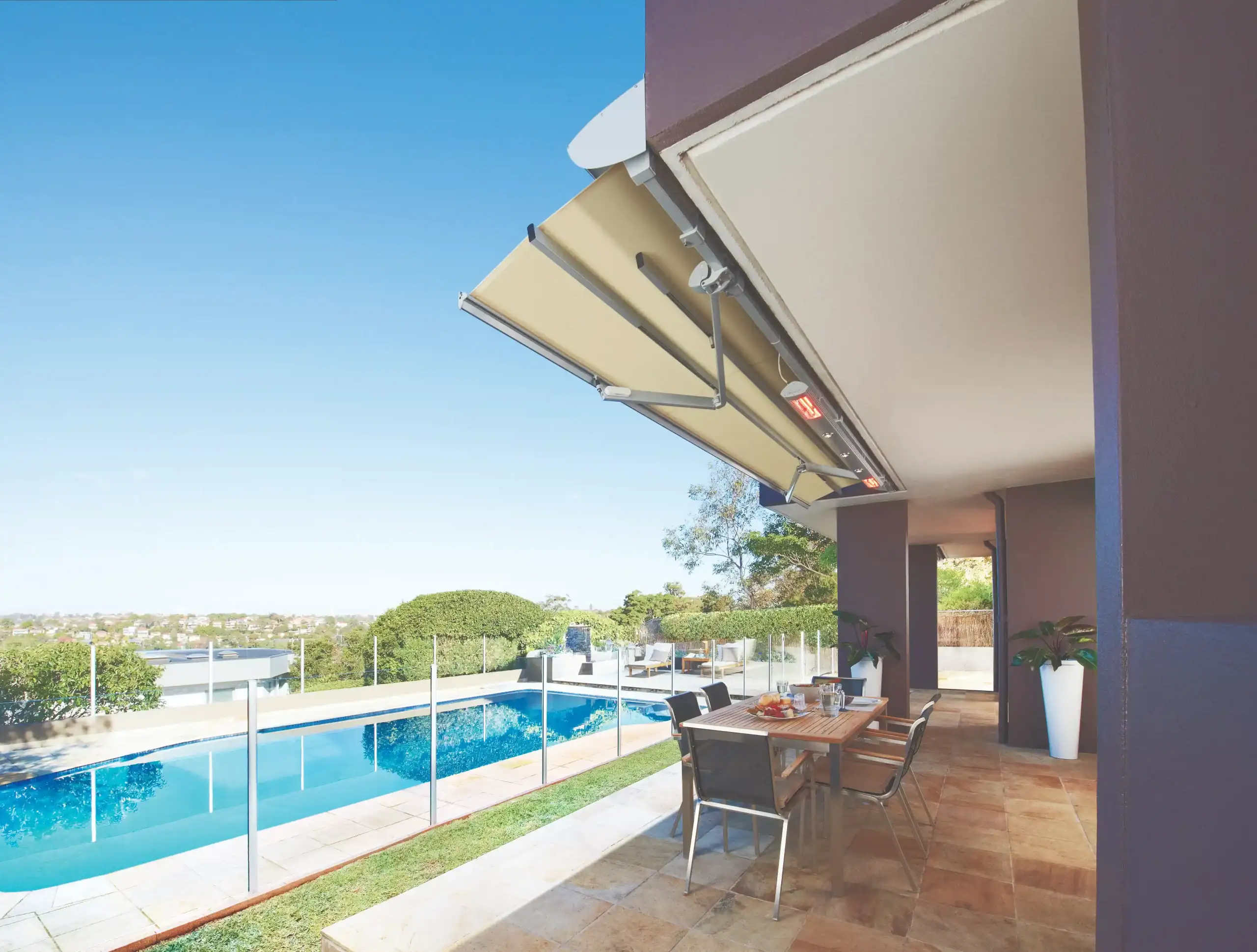
Outside, they installed a Como folding arm awning — the final touch that turned a small city block into a genuine outdoor room, alongside space to park a car. External shading doesn’t just make the backyard more usable; it helps regulate the internal temperature of the house too, since heat transfer through unshaded glass can push a room’s temperature up quickly on a hot afternoon.
To keep the ultra-luxe look consistent, they colour-matched the awning fabric and hardware to the home’s exterior — a detail that’s easy to skip and immediately noticeable when it’s missing. For Sydney’s coastal light, matching the awning to your render or brickwork (rather than defaulting to white) is what stops it reading as a bolt-on addition.

Blinds shouldn’t be an afterthought at the end of the project — they’re something you’ll interact with every single day.

Second Living Room
A Different Texture, Not the Same Blind Everywhere
The upstairs living area opens onto the terrace through big sliding doors, so they chose Modern Roman Shades in ‘White Dawn’ with a traverse operating method, letting the fabric vanes sit vertically and open easily alongside the doors.
It used to be assumed every room in a home should carry the same window covering for consistency — that’s simply not true anymore. The texture in this Sheer Linen fabric echoes the vertical timber panelling and stone feature wall, keeping the space warm while staying versatile enough to become an office or a sitting room down the track.
Upstairs Bedrooms
Blocking Light Without Blocking the View
Both upstairs bedrooms feature Duette Architella Shades in Elan Black Onyx and Platinum. These honeycomb shades are particularly good for bedrooms, with minimal light gaps and the ability to achieve full blockout — so street lamps and early-morning sun don’t disturb a restful night’s sleep.
Given the home’s dazzling city views, the shades were recessed into the bulkhead so there’s no visible obstruction when looking out. For a Sydney bedroom facing harbour or city views, this recessed detail is worth asking your installer about specifically — it’s the difference between a shade that disappears and one that frames every window with hardware.

Whole House Automation
One System, Every Room
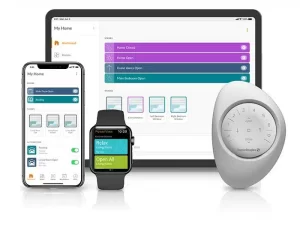
The whole house runs on Luxaflex PowerView Motorisation — one of the very first properties to install the next-generation model of the system. Child and pet safety is an increasing concern for homeowners, and a motorised, cordless setup solves that without sacrificing style.
The new owners can close every blind at the touch of a button, schedule window coverings to lower exactly when they choose, or build personalised ‘Scenes’ through the PowerView App — greeting the day with sun in the master bedroom and kitchen each morning, then having everything gracefully close before they leave for work in summer to keep the house cool. For a multi-storey Sydney home, this is usually where the real time savings show up: no more walking room to room adjusting blinds by hand twice a day.
The Products In This Renovation
Explore The Range
Luminette® Privacy Sheers
Rotating vertical vanes for full light control and 180° privacy.

Roman Blinds
Textured fabric folds that bring warmth to a room without repeating the same look twice.

Duette® Architella Shades
Honeycomb-within-honeycomb construction for blockout, insulation and quiet.

Como Awning
A folding arm awning that finishes an outdoor room and cuts heat transfer.
PowerView® Motorisation
One system, scheduled Scenes, and cordless safety for every room.
Planning a Renovation? Start With the Windows
Whether you’re working around a heritage overlay in Paddington or a harbour-facing wall of glass in Double Bay, book a free in-home measure and quote before your building plans are locked in — it’s the one decision that shapes every room around it.
Or visit us at astyleofshade.com.au/contact-us/